Best Acne Treatment Clinic in Hyderabad By Top Dermatologists

Acne & Pimple Treatment in Hyderabad —

Board-Certified Dermatologists · US-FDA Approved Equipment · Personalised Protocols · Indian Skin Expertise · 4 Clinics in Hyderabad

FMS Skin & Hair is one of Hyderabad’s best acne treatment clinics, with board-certified dermatologists (MBBS MD DVL), US-FDA approved equipment and personalised treatment protocols for every acne type. Treatments include topical and oral medical management (retinoids, antibiotics, isotretinoin), Chemical Peels (from ₹3,000/session), Carbon Peel Laser (from ₹8,000/session), MNRF Acne Scar Treatment (from ₹10,000/session), CO2 & Erbium:YAG Fractional Laser (from ₹8,000/session), Intralesional Corticosteroid Injections (from ₹1,500/lesion), and Dermal Fillers for scar correction. Clinics at Jubilee Hills, Kondapur, Koti and Kukatpally. Open 7 days, 9 AM–8 PM. Call: +91 88850 60760.

30+
Years FMS Group Healthcare Legacy
Board
Certified Dermatologists
US-FDA
Approved Equipment
4
Clinics in Hyderabad

Which is the best clinic for acne treatment in Hyderabad?

FMS Skin & Hair Clinics is one of Hyderabad's best acne treatment clinics — with board-certified dermatologists (MBBS MD DVL), US-FDA approved equipment, and personalised treatment protocols for every acne type.
CLINICAL FOUNDATION

Understanding Acne — What Causes It & Why It Keeps Coming Back

Acne is one of the most mismanaged skin conditions in India — not because it is complicated, but because most treatments are prescribed without understanding the individual. Your acne has a cause: hormonal, bacterial, dietary, or product-related. Until the root cause is found, treatment only addresses symptoms — which is why so many patients cycle through antibiotics and creams without achieving lasting clearance.

Acne forms when the pilosebaceous unit (hair follicle + sebaceous gland) becomes obstructed. Excess sebum production, dead skin cell accumulation, bacterial colonisation (primarily Cutibacterium acnes, formerly Propionibacterium acnes) and subsequent inflammatory response are the four stages that convert a blocked pore into an acne lesion. The severity, pattern and location of acne determine which stage dominates and which treatment is most appropriate.

✦ The 4 Reasons Acne Keeps Coming Back
Antibiotics without retinoids: Antibiotics alone do not address excess oil and follicular hyperkeratinisation—the two causes that continue producing new comedones after antibiotics are stopped.
Hormonal causes not addressed: Hormonal acne requires hormonal evaluation and targeted management, not only topical creams that cannot override active hormonal stimulation of sebum production.
No maintenance phase: Stopping treatment as soon as acne improves is one of the most common causes of recurrence. A maintenance phase with a low-dose retinoid helps prevent new microcomedone formation.
Wrong skincare and makeup: Comedogenic products (containing certain silicones, oils and waxes) can clog pores and trigger repeated breakouts despite ongoing treatment. FMS dermatologists review and correct product choices during consultation.

Why Hormonal Acne Is Frequently Missed ?

Hormonal acne is the most commonly undertreated acne type in Indian women. It presents characteristically on the jawline, chin and lower cheeks, typically worsening in the week before menstruation and often associated with PCOS, irregular cycles or elevated androgens. Treating hormonal acne with antibiotics alone — without addressing the underlying hormonal driver — produces only temporary improvement, as the hormonal trigger continues to stimulate excess sebum production regardless of antibiotic treatment. At FMS, dermatologists evaluate the hormonal profile for all women with suspected hormonal acne before designing the treatment protocol.
✦ The Four Root Causes of Acne
Excess sebum production: Triggered by androgens (testosterone, DHT), stress hormones (cortisol) and diet (high-glycaemic foods, dairy in susceptible individuals). Sebum excess creates the clogged follicular environment in which acne bacteria thrive.
Follicular hyperkeratinisation: Abnormal shedding of skin cells inside the follicle creates a "plug" that traps sebum and bacteria—the microcomedone that precedes every acne lesion. Retinoids are the most effective treatments that address this mechanism.
Bacterial colonisation: Cutibacterium acnes metabolises trapped sebum into free fatty acids that trigger inflammatory cytokine release, converting a blocked pore into an inflamed papule or pustule. Antibiotics and benzoyl peroxide target this stage.
Inflammation: The immune response to bacterial colonisation produces the redness, pain and swelling of inflammatory acne. Uncontrolled inflammation can lead to permanent acne scarring—the most persistent consequence of undertreated acne.
ACNE CLASSIFICATION

Every Type of Acne We Treat — Classified & Treated Precisely

FMS dermatologists classify each patient’s acne precisely before treating — because what works for comedonal acne is completely different from what treats cystic nodular acne. Applying the same treatment regardless of acne type is the most common reason acne treatment fails.

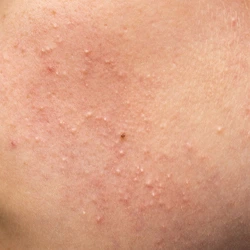
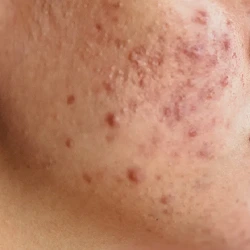
Comedonal acne with whiteheads and blackheads
Mild

Comedonal Acne — Whiteheads & Blackheads

The earliest stage of acne — pores clogged with sebum and dead skin cells. Open comedones (blackheads) oxidise in air, turning the plug black. Closed comedones (whiteheads) remain beneath the skin surface as flesh-coloured bumps. Comedonal acne is primarily on the forehead, cheeks and chin; caused by excess sebum production and blocked pores; worsened by comedogenic skincare and makeup products.

  • Primarily on forehead, cheeks and chin
  • Caused by excess sebum + blocked pores
  • Worsens with comedogenic products

Best treatment: Daily retinoid (tretinoin or adapalene) + professional comedone extraction + salicylic acid chemical peels

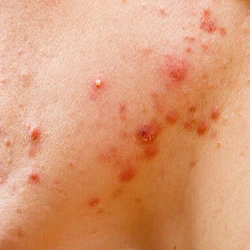
Inflammatory acne showing papules and pustules
Moderate

Inflammatory Acne — Papules & Pustules

Comedones infected with Cutibacterium acnes bacteria become red, inflamed and raised. Papules are firm, red bumps without visible pus; pustules have a visible white or yellow centre. Squeezing at this stage significantly increases scar risk by rupturing the follicle wall deeper into the dermis, triggering a more intense inflammatory response. Can appear on face, chest and back.

  • Red, tender inflamed spots
  • Can appear on face, chest and back
  • Squeezing increases scar formation

Best treatment: Topical antibiotics + benzoyl peroxide + salicylic acid or glycolic acid chemical peels + blue light laser therapy

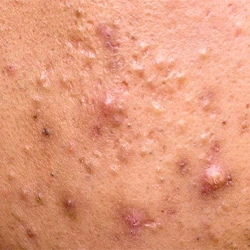
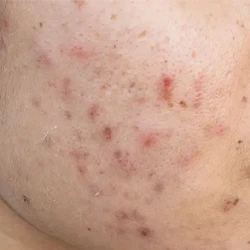
Nodular and cystic acne on facial skin
Severe

Nodular & Cystic Acne

The most severe form of acne involving painful deep nodules or cysts that extend far below the skin surface into the dermis. Nodules are large, solid, painful lumps. Cysts are pus-filled and particularly likely to cause permanent scarring if untreated or self-treated. Does not respond to over-the-counter products and requires urgent medical management.

  • Large painful deep-seated lumps
  • Highest risk of permanent scarring
  • Does not respond to home remedies

Best treatment: Intralesional corticosteroid injections for active cysts + oral isotretinoin for persistent nodular acne + medical management

Hormonal acne in women on jawline
Hormonal

Hormonal Acne in Women

Hormone-driven acne commonly appearing around the jawline, chin and lower cheeks, worsening before menstruation and strongly associated with PCOS, elevated androgens or hormonal fluctuations. Characteristically deep, painful lesions that do not respond well to topical antibiotics alone. Frequently occurs in women in their 20s, 30s and 40s who had clear skin as teenagers.

  • Jawline and chin pattern
  • Worsens before periods
  • Strongly associated with PCOS

Best treatment: Hormonal evaluation (FSH, LH, testosterone, DHEA-S, prolactin, insulin) + hormonal balancing therapy + topical retinoids + chemical peels

Adult acne after teenage years
Adult

Adult Acne — Post-Teenage Adult Acne

Adult acne is commonly triggered by stress (cortisol stimulates sebum production), urban pollution (oxidative stress on the skin surface), diet changes (high-glycaemic foods, dairy), incorrect skincare products and environmental factors. Adult skin scars more easily than teenage skin because wound healing capacity decreases with age. Particularly frustrating for patients who expect they should have ‘grown out’ of acne.

  • Affects adults over 25
  • Stress and pollution are common triggers
  • Adult skin scars more easily

Best treatment: Lifestyle modification guidance + prescription-strength topicals + periodic chemical peels + pigmentation management for PIH marks

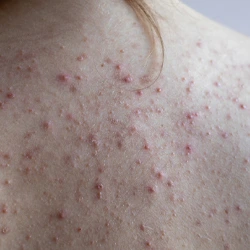
Back and body acne on shoulders and back
Body

Back & Body Acne

Back and chest acne are often more resistant to treatment because body skin is thicker, more exposed to sweat and friction (from clothing), and has larger, more active sebaceous glands. Folliculitis — inflammation of hair follicles from sweat bacteria — is frequently mistaken for body acne and requires different treatment. Body acne can leave significant scarring and post-inflammatory hyperpigmentation.

  • More resistant than facial acne
  • Triggered by sweat and friction
  • Can leave significant scarring

Shower hygiene guidance + body retinoids + salicylic acid body wash + chemical body peels + laser therapy for significant body acne

COMPLETE TREATMENT MENU

Acne Treatment Options at FMS Skin & Hair Hyderabad

FMS uses a multi-modality approach — combining medical management with advanced in-clinic procedures, designed for each patient’s skin type, acne grade, trigger profile and treatment goals. Every protocol begins with understanding the individual, not applying a standard package.

Medical Management
💊

Gold Standard Acne Base Treatment

Topical Prescription Treatments

The foundation of every acne protocol at FMS. Dermatologists prescribe evidence-based topicals in the right combinations and concentrations for each patient’s specific acne type, skin tone and sensitivity profile. Over-the-counter concentrations of retinoids, benzoyl peroxide and topical antibiotics are sub-therapeutic — prescription-strength formulations are significantly more effective and are calibrated by the dermatologist for safety on Indian skin.

  • Retinoids — tretinoin, adapalene, tazarotene: address follicular hyperkeratinisation (the root cause of comedone formation); the most evidence-backed class of acne treatment for long-term remission
  • Benzoyl: kills Cutibacterium acnes bacteria without contributing to antibiotic resistance; reduces both inflammatory lesions and comedones
  • Topical anti-inflammatory agents: azelaic acid, niacinamide — reduce redness, post-inflammatory hyperpigmentation and sebum production
Note: Topical treatment alone is insufficient for moderate to severe acne — it is always combined with in-clinic procedures and, where needed, oral medication at FMS.
🩺

Acne Treatment for Moderate - Severe Acne

Oral Prescription Medications

Oral medications target the systemic causes of acne, such as bacterial overgrowth and excessive sebum production, under the supervision of FMS dermatologists. Treatment is carefully selected based on acne severity, medical history and individual risk factors, with regular monitoring throughout the course.

  • Oral antibiotics (doxycycline, azithromycin, minocycline): Reduce systemicCutibacterium acnes colonisation and the inflammatory response. They are always prescribed alongside topical retinoids to minimise antibiotic resistance and are typically limited to a 3–6 month course.
  • Oral isotretinoin: The most effective treatment for severe, nodular, cystic or treatment-resistant acne. It directly reduces sebaceous gland size and sebum production. Treatment requires baseline blood tests, mandatory pregnancy testing for women, and regular follow-up throughout the 4–6 month course.
  • Routine blood monitoring and follow-up throughout course; FMS follows global safety guidelines for isotretinoin prescription and monitoring
Results: Significant long-term acne reduction — oral isotretinoin produces remission in approximately 85% of patients at appropriate doses.
⚕️

Hormonal Acne Treatment

Hormonal Therapy for Women

Designed for women with hormone-driven acne including PCOS-related breakouts, cyclical premenstrual acne and adult female acne with a hormonal pattern (jawline, chin, lower cheeks).

  • Complete hormonal evaluation: FSH, LH, total testosterone, free testosterone, DHEA-S, prolactin, fasting insulin — ordered by FMS dermatologist based on clinical assessment
  • Anti-androgen medications where appropriate: spironolactone reduces androgen-driven sebum production; highly effective for hormonal jawline acne in women
  • Oral contraceptive pills for eligible candidates: combined OCPs reduce free androgen levels and sebum production; considered alongside dermatologist prescription after hormonal evaluation
  • Coordination with gynaecologist for PCOS patients for integrated hormonal management
Results: Hormonal acne that fails to respond to antibiotics and topicals often clears significantly once the hormonal driver is addressed.
In-Clinic Procedural Treatments
🧪

Treatment for Active Acne + Marks

Chemical Peels for Acne

Medical-grade Chemical peels exfoliate the skin, unclog pores, reduce active acne lesions and fade post-inflammatory hyperpigmentation (PIH). Peel selection and concentration are carefully calibrated by the dermatologist based on your acne type, skin tone and Fitzpatrick skin grade.

  • Salicylic acid peels (BHA): the most acne-specific peel—oil-soluble, penetrates deep into pores, reduces sebum, targets Cutibacterium acnes bacteria and improves both active acne and blackheads; ideal for oily, acne-prone Indian skin.
  • Glycolic acid peels (AHA): accelerate cell turnover, improve skin texture and reduce PIH marks; often combined with salicylic acid for comprehensive acne and pigmentation treatment.
  • Jessner's peel: a combination of salicylic acid, lactic acid and resorcinol; particularly effective for acne with concurrent PIH and uneven skin tone on Indian skin.
  • TCA peels: used for resistant acne and superficial acne scarring, providing a stronger skin resurfacing effect.
Price: From ₹3,000/session · Typical course: 4–8 sessions, 2–3 weeks apart.
Bacterial Destruction Treatment

Laser Therapy for Active Acne

Blue and red light laser therapy targets acne at the bacterial and inflammatory level without antibiotics, making it particularly valuable for patients who cannot tolerate oral antibiotics or who want to reduce antibiotic exposure.

  • Blue light (415nm): specifically absorbed by porphyrins produced by C. acnes bacteria, generating reactive oxygen species that destroy the bacteria — direct antibacterial mechanism
  • Red light (630–700nm): reduces inflammation, accelerates wound healing and minimises post-acne redness and scarring
  • Safe for all Indian skin tones — no risk of pigmentation when parameters are correctly set for Fitzpatrick IV–VI
  • No downtime after sessions; comfortable treatment
Price: From ₹3,000/session · Typical course: 4–6 sessions
💉

Cystic & Nodular Treatment

Intralesional Corticosteroid Injections

The fastest available treatment for painful individual cysts and nodules — reduces inflammation, swelling and scar risk within days. Performed only by board-certified dermatologists at FMS.

  • Triamcinolone acetonide injected directly into the active cyst — suppresses the intense inflammatory response within the lesion
  • Visible reduction in lesion size and pain within 24–72 hours
  • Prevents follicle wall rupture — the mechanism that causes the deep scarring associated with untreated cysts
  • Best used for isolated, painful individual cysts rather than widespread acne
Price: From ₹3,000/session · Typical course: 4–6 sessions
🌟

Oil Control + Pore Reduction Treatment

Carbon Peel Laser (Hollywood Peel)

Carbon peel laser deeply cleans pores, controls oil production, reduces acne-causing bacteria and improves overall skin texture — making it an effective monthly maintenance treatment for acne-prone skin.

  • Medical-grade carbon lotion applied to the face and treated with Q-Switched Nd:YAG laser
  • Laser energy absorbed by carbon particles vaporises congested pores and kills C. acnes bacteria on contact
  • Simultaneously reduces pore size, controls sebum production and brightens skin
  • Zero downtime; safe for all Indian skin tones
Price: From ₹8,000/session · Ideal as monthly acne maintenance
Advanced Acne Scar Treatment

MNRF (Microneedling Radiofrequency) for Acne Scars

MNRF is the most effective and safest acne scar treatment for Indian skin (Fitzpatrick IV–VI). Fine needles deliver radiofrequency energy directly into the dermis, bypassing the epidermis and eliminating the risk of post-inflammatory hyperpigmentation — the major concern with ablative laser resurfacing on dark Indian skin.

  • Insulated microneedles penetrate to precise dermal depths (1.5–3.5mm) and deliver RF thermal energy at the dermal collagen level
  • RF energy stimulates robust collagen neogenesis and dermal remodelling — gradually elevating the base of atrophic (depressed) acne scars
  • Particularly effective for rolling scars and boxcar scars; less effective for deep ice-pick scars (which may require TCA CROSS or subcision)
  • Minimal surface impact — skin appears mildly red for 24–48 hours; full social return in 48–72 hours

Price: From ₹10,000/session · Typical course: 4–6 sessions, 4–6 weeks apart

🔬
Advanced Laser Acne Scar Treatment

CO2 & Erbium:YAG Fractional Laser Resurfacing

Fractional ablative laser resurfacing for acne scars — creating controlled micro-columns of laser injury that stimulate significant collagen remodelling and surface renewal. At FMS, fractional lasers are used selectively for appropriate Indian skin patients (primarily Fitzpatrick III–IV) where skin tone allows safe ablative treatment, or in combination with MNRF for comprehensive scar correction.

  • CO2 fractional laser: deeper penetration, greater remodelling of fibrous scar tissue; more effective for deeper boxcar and rolling scars
  • Erbium:YAG fractional laser: shallower, more precise ablation with less thermal damage; better suited for darker Indian skin tones within the Fitzpatrick IV range
  • Combined MNRF + fractional laser protocols produce superior results to either treatment alone
  • Post-procedure: 5–7 days of redness and peeling; SPF50+ essential; not suitable for Fitzpatrick V–VI without careful dermatologist assessment

Price: From ₹8,000/session · Typical course: 4–8 sessions

💉
Advanced Acne Scar Correction

Dermal Fillers for Acne Scar Correction

Dermal fillers — typically hyaluronic acid (HA) — are used to elevate depressed acne scars by restoring lost volume beneath the scar base. Particularly effective for rolling scars and some boxcar scars. Results are immediate and last 6–12 months depending on product and scar location. At FMS, dermal filler scar correction is performed only by board-certified dermatologists, often in combination with MNRF or subcision for maximum improvement.

Price: On consultation · 1–2 sessions typically · Results last 6–12 months

Our Approach

We Don’t Just Clear Your Skin.
We Understand Why It Broke Out.

01

Diagnosis Before Prescription

Your acne has a cause — hormonal, bacterial, dietary or product-related. FMS dermatologists spend time identifying it before prescribing anything. Skin type, trigger history, hormonal profile if needed, previous treatments tried. Only then does a personalised protocol begin.
02

Combination Protocols — Not Single Solutions

Effective acne treatment integrates medical management (topicals + oral medication where needed), in-clinic procedures (peels, laser, MNRF) and homecare guidance into one coordinated protocol. No single treatment clears acne comprehensively — the combination, sequenced correctly, does.

03

Indian Skin Expertise

Indian skin (Fitzpatrick III–VI) scars differently and pigments differently from lighter skin types. MNRF is preferred over ablative CO2 laser for acne scars in Indian patients because it bypasses the melanin-dense epidermis. Chemical peel concentrations are calibrated for Indian skin. Post-inflammatory hyperpigmentation prevention is built into every FMS acne protocol from day one.

04

Honest About What Acne Treatment Can Achieve

Acne can go into long-term remission with the right treatment — especially when the root cause is properly addressed. Some patients require ongoing maintenance to remain clear. We do not promise permanent cures without understanding the individual. We provide realistic expectations, proper timelines and continuous progress monitoring — not false ‘instant results’ promises.

Acne Scar Treatment

Acne Scar Treatment at FMS Skin & Hair Hyderabad

Why Personalised Scar Assessment Matters

Different acne scars require different treatments.

Acne scars are the most persistent consequence of acne — and the most complex to treat. Different scar types have fundamentally different structures and respond to different treatments. Treating all acne scars with the same modality produces poor results; matching treatment to scar type is what FMS dermatologists do at every scar assessment consultation.

At FMS Skin & Hair Clinics, acne scar treatment plans are customised based on scar morphology, skin type, depth of scarring and pigmentation risk. Combination protocols often produce significantly better outcomes than a single treatment modality.

Scar Type Appearance Best Treatment at FMS
Rolling Scars Undulating, wave-like depressions with sloping edges MNRF · Subcision · Dermal Fillers · Fractional Laser
Boxcar Scars Broad, flat-bottomed depressions with sharply defined walls MNRF · Fractional CO2/Erbium Laser · Dermal Fillers
Ice Pick Scars Deep, narrow, V-shaped scars extending into the dermis TCA CROSS · MNRF
Pitted / Atrophic Scars Generalised skin surface depression and pitting MNRF · Fractional Laser · Combination Protocols
Post-Acne PIH (Dark Marks) Flat brown or red marks after acne healing Chemical Peels · Q-Switch Laser · Tranexamic Acid Mesotherapy
Raised / Hypertrophic Scars Raised, firm scar tissue Intralesional Corticosteroid · Intralesional Cryotherapy
Keloid Scars Raised scars extending beyond original wound boundaries Intralesional Corticosteroid · Intralesional Cryotherapy · Laser

Gold Standard for Indian Skin

Why MNRF Is the Gold Standard for Indian Skin Acne Scars

MNRF (Microneedling Radiofrequency) is the most widely recommended acne scar treatment for Indian skin (Fitzpatrick IV–VI) for a critical reason: the RF energy is delivered into the dermis via insulated needles, bypassing the melanin-rich epidermis entirely. This means there is no photo-thermal damage to the skin surface — eliminating the post-inflammatory hyperpigmentation risk that makes conventional ablative CO2 laser resurfacing dangerous on dark Indian skin. MNRF stimulates robust collagen production and dermal remodelling that progressively elevates atrophic scars over 3–6 months post-treatment, with results continuing to improve for up to 6 months after the final session.
Transparent Pricing

Acne Treatment Cost at FMS Skin Hyderabad — 2026 Guide

Acne & pimple Treatment Cost Hyderabad 2026

What is the cost of acne & Pimple treatment in Hyderabad in 2026?

Acne & Pimple treatment cost at FMS Skin Hyderabad starts from ₹1000 for dermatologist consultation. Chemical peels start from ₹3,000/session, CO2 & Erbium:YAG Laser Resurfacing (Acne Scars) treatment from ₹8,000/session, Carbon peel laser from ₹8,000/session and MNRF acne scar treatment from ₹10,000/session.

At FMS Skin, every patient receives a personalised treatment estimate after dermatologist assessment. The number of sessions, procedures and total treatment cost are explained clearly before treatment begins.

Treatment Starting Cost Sessions
Dermatologist Consultation From ₹1,000 As required
Intralesional Injection (per cyst) From ₹1,500 Per active lesion
Chemical Peel (Acne) From ₹3,000 4–8 sessions, 2–3 weeks apart
Laser Therapy (Blue/Red Light) From ₹3,000 4–6 sessions
HydraFacial for Acne From ₹4,000 Monthly maintenance
Carbon Peel Laser From ₹8,000 4–6 sessions
CO2 & Erbium:YAG Fractional Laser (Acne Scars) From ₹8,000 4–8 sessions
MNRF — Acne Scar Treatment From ₹10,000 4–6 sessions, 4–6 weeks apart
Dermal Fillers (Scar Correction) On consultation 1–2 sessions
Medical Acne Management (Topicals + Oral) Varies by prescription 3–6 months+
Hormonal Evaluation (Blood Panel) On consultation One-time + follow-up
Oral Isotretinoin Course Varies 4–6 month course with monitoring

Package discounts available for multi-session bookings. All prices are indicative — exact plan and cost confirmed after dermatologist assessment.

★ Indicative pricing. Exact treatment cost confirmed after dermatologist consultation — no hidden charges at FMS Skin. Call +91 88850 60760.
Get a Personalised Cost Estimate
Your Treatment Journey

How Acne & Pimple Treatment Works at FMS Skin — Step by Step

Every acne patient at FMS Skin goes through a structured assessment before treatment begins. Because understanding acne properly is what leads to long-term results.

1

Dermatologist Consultation & Skin Assessment

Detailed evaluation of acne history, triggers, skin type and severity grading by a board-certified dermatologist. This includes: acne type and grade classification (comedonal, inflammatory, cystic, hormonal), skin type and Fitzpatrick assessment, trigger identification (diet, stress, products, hormonal), previous treatments tried and their outcomes, current skincare and makeup product review, and blood tests ordered if hormonal acne is suspected.

2

Hormonal Evaluation (If Indicated)

Hormonal blood tests may be ordered for cyclical acne, jawline-pattern acne in women, or any suspected PCOS-related breakouts. The panel typically includes FSH, LH, total and free testosterone, DHEA-S, prolactin and fasting insulin. Results are reviewed by the dermatologist and, where PCOS or significant hormonal imbalance is identified, the FMS team coordinates with the patient’s gynaecologist for integrated management.

3

Personalised Treatment Plan

A complete acne roadmap is designed including: prescription topical and oral medications with clear instructions, in-clinic procedures (peels, laser, MNRF) with session schedule and intervals, realistic timelines for visible improvement, homecare guidance including skincare and product recommendations, and dietary and lifestyle advice where relevant. The protocol is explained clearly and all costs are confirmed before any treatment begins.

4

In-Clinic Procedures

Treatments like chemical peels, MNRF, laser therapy, intralesional injections and HydraFacial are scheduled and monitored carefully by the dermatologist at every session. Progress is photographically documented at each visit for objective comparison. Protocol adjustments are made based on skin response — no two patients progress identically.

5

Maintenance & Long-Term Prevention

Follow-up visits maintain achieved results, adjust skincare as skin condition improves and prevent future acne recurrence. Most patients transition to a maintenance phase involving low-dose retinoid, periodic chemical peels (every 4–6 weeks) and appropriate home care. Stopping treatment at clearance without a maintenance plan is the most common cause of acne recurrence.

Why Acne Returns

The 4 Reasons Acne Keeps Coming Back

1. Antibiotics Without Retinoids

Antibiotics alone do not address excess oil and clogged pores, leading to recurring acne after treatment stops.

2. Hormonal Causes Not Addressed

Hormonal acne requires hormonal evaluation and targeted management, not only topical creams.

3. No Maintenance Phase

Stopping treatment once acne improves is one of the most common causes of recurrence.

4. Wrong Skincare & Makeup

Comedogenic products clog pores and trigger repeated breakouts despite ongoing treatment.

Important: Every FMS acne protocol includes skincare guidance and homecare recommendations to support your clinical treatment and maintain long-term skin clarity.
Why Choose FMS Skin

Why Acne Patients Choose FMS Skin & Hair Clinics for Acne Treatment

🎓

Board-Certified Dermatologists

Every acne consultation and treatment at FMS Skin is performed by qualified dermatologists with extensive clinical expertise in acne management and scar correction.

🔬

US-FDA Approved Equipment

FMS uses advanced US-FDA approved laser systems, MNRF devices and dermatology technology for safe, effective and evidence-based acne treatment.

🎯

Indian Skin Expertise

Our treatment protocols are designed specifically for Indian skin tones to minimise pigmentation risk while delivering effective acne and scar reduction.

📋

Combination Treatment Protocols

FMS combines medical management, in-clinic procedures and personalised homecare into one integrated acne treatment roadmap.

🤝

Transparent & Honest Guidance

We provide realistic treatment expectations, proper timelines and continuous progress monitoring instead of false “instant results” promises.

📍

4 Clinics Across Hyderabad

Convenient locations at Jubilee Hills, Kondapur, Koti and Kukatpally ensure consistent follow-up and continuity of acne care.

Acne & Pimple Treatment Questions — Answered by FMS Dermatologists

What is the best treatment for hormonal acne in women?

Hormonal acne treatment usually combines hormonal evaluation, prescription medications, topical retinoids and dermatologist-supervised procedures like chemical peels or laser therapy for long-term control.

Are chemical peels safe for Indian skin?

Yes. Dermatologist-selected chemical peels are safe and effective for Indian skin tones. Proper peel selection helps reduce acne, excess oil, pigmentation and acne marks without damaging the skin barrier.

Where are FMS Skin acne clinics located in Hyderabad?

FMS Skin & Hair clinics are located at Jubilee Hills, Kondapur, Koti and Kukatpally in Hyderabad with consultations available throughout the week.
Our Dermatologists

Board-Certified Dermatologists For Acne Treatment at FMS Skin & Hair

Every acne consultation at FMS Skin is conducted by experienced, board-certified dermatologists focused on long-term skin health, acne management and advanced scar correction for Indian skin. Acne is a medical condition — effective treatment requires medical expertise, not beauty therapist advice.

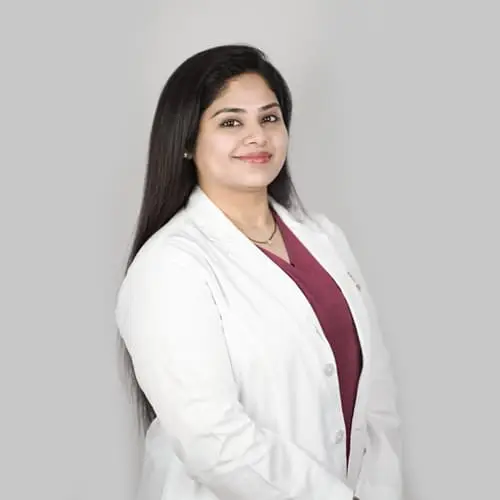
Dr. Swathi ,Dermatologist at FMS Skin & Hair Clinic

Dr. Swathi Kammili

MBBS, MD, DVL
Dr. Shruthi Gondi, Dermatologist at FMS Skin & Hair Clinic

Dr. Shruthi Gondi

MBBS, MD, DVL
Dr. Radhika Venkatachelam, Dermatologist & trichologist at FMS Skin & Hair Clinic

Dr. Radhika Venkatachalam

MBBS, DDVL
Dr. Munivenkat Vakucherla, Trichologist at FMS Skin & Hair Clinic

Dr. Munivenkat Vakucherla

MBBS, MSc, Diploma in Aesthetic Medicine
OUR DERMATOLOGISTS

Board-Certified Dermatologists For Acne Treatment at FMS Skin & Hair

Every acne consultation at FMS Skin is conducted by experienced, board-certified dermatologists focused on long-term skin health, acne management and advanced scar correction for Indian skin. Acne is a medical condition — effective treatment requires medical expertise, not beauty therapist advice.

swathi

Dr. Swathi Kammili

MBBS, MD, DVL
Shruthi

Dr. Shruthi Gondi

MBBS, MD, DVL
Radhika

Dr. Radhika Venkatachalam

MBBS, DDVL
Shruthi

Dr. Munivenkat Vakucherla

MBBS, MSc, Diploma in Aesthetic Medicine

PATIENT STORIES

Acne Treatment Results at FMS
Real Patients. Real Outcomes. Real Confidence

★★★★★

"I had rolling acne scars for six years and I'd completely given up. My friend referred me to FMS Skin in Jubilee Hills and honestly, Dr. Swathi changed my life. After 4 sessions of MNRF — preceded by two rounds of subcision — my skin looks genuinely different. Not perfect, but the rolling texture is almost completely gone. I actually look forward to going out now."

Priya M., 27, Banjara Hills, Hyderabad

MNRF + Subcision — Rolling Scars
★★★★★

"The before and after photos don't do it justice. I had deep boxcar scars on both cheeks that made me self-conscious in meetings. Dr. Supriya did MNRF first, then fractional laser. Six months later I look at myself in the mirror and I don't recognise my old skin. The FMS team is professional, transparent about what to expect and genuinely excellent at what they do."

Rohith V., 32, Kondapur, Hyderabad

Fractional Laser + MNRF — Boxcar Scars
★★★★★

"I spent years using home remedies and OTC creams on my dark marks. Nothing worked. At FMS Skin Kukatpally, Dr. Radhika put me on Q-Switch laser sessions combined with chemical peels. Within 3 months the dark patches were 80% lighter. For the first time in years I'm comfortable going out without heavy coverage makeup. I wish I'd come here sooner."

Kavitha R., 24, Kukatpally, Hyderabad

Q-Switch Laser — PIH Dark Marks
Patient Stories

Real Patients. Real Skin. Real Results at FMS Skin Hyderabad.

★★★★★
I had cystic acne on my jawline for four years. Every clinic gave me the same antibiotics that worked for 2 months then stopped. FMS Skin was the first place that investigated whether my acne was hormonal. It was — PCOS-related. They prescribed the right hormonal treatment alongside a chemical peel course. My skin has been clear for 14 months.
Priya M. — Kondapur, Hyderabad
Hormonal Acne · PCOS · Chemical Peels
★★★★★
I had severe boxcar and rolling scars from teenage acne. I tried home remedies, serums, and one laser session elsewhere that left me with hyperpigmentation. Dr. Swathi at FMS Skin assessed my scars properly and explained that MNRF was right for my skin tone. Six sessions later, the improvement is dramatic.
Ravi K. — Jubilee Hills, Hyderabad
Acne Scars · MNRF · 6 Sessions
★★★★★
I came for what I thought was mild acne. The dermatologist reviewed my skincare products, diet, stress levels, and previous treatments. She identified three things making my acne worse, including a moisturiser that clogged my pores. Three months later, the difference is remarkable.
Ananya S. — Kukatpally, Hyderabad
Acne Management · Consultation · Homecare

Our Blogs

Best Acne Treatments & Tips Suggested By Dermatologist

Read More
Transforming Skin: The Magic of Fractional Laser Treatment for Acne Scars

Effective Dermatological Procedures for Treating Pimples

Read More
Unveiling the Marvels of Microneedling and MNRF: A Comprehensive Guide

How Chemical Peels Work for Acne: An In-Depth Guide

Read More
Acne Scars Treatments & What Really Works: A Comprehensive Guide

Hormonal Acne Causes,Symptoms & Effective Treatments suggested by Dermatologist

Read More

Frequently Asked Questions

Acne Treatment FAQs — Hyderabad

FMS Skin & Hair Clinics is one of Hyderabad’s best acne treatment clinics — with board-certified dermatologists (MBBS MD DVL), US-FDA approved equipment, and personalised acne protocols for all acne types from mild comedonal to severe cystic and hormonal acne. Clinics at Jubilee Hills, Kondapur, Koti and Kukatpally. Call +91 88850 60760.

Acne treatment cost at FMS Skin: dermatologist consultation from ₹1,000; chemical peels from ₹3,000/session; laser acne treatment from ₹3,000/session; carbon peel laser from ₹8,000/session; MNRF for acne scars from ₹10,000/session; CO2/Erbium fractional laser from ₹8,000/session; intralesional injections from ₹1,500/lesion. Exact plan and total cost confirmed after dermatologist consultation — no hidden charges at FMS.

For many patients, acne can go into long-term remission with the right treatment — especially when the root cause (hormonal, bacterial or product-related) is properly addressed. Some patients require ongoing maintenance (low-dose retinoid + periodic peels) to remain clear. Acne from controllable triggers often resolves permanently when those triggers are eliminated. FMS dermatologists provide a realistic prognosis based on each patient’s specific acne type at consultation.

Hormonal acne treatment combines hormonal evaluation (blood panel including testosterone, DHEA-S, LH, FSH, prolactin), prescription anti-androgen medications (spironolactone) or hormonal balancing protocols where appropriate, topical retinoids and dermatologist-supervised procedures like chemical peels or laser therapy. For PCOS patients, FMS coordinates with gynaecologists for integrated care. Treating hormonal acne with antibiotics alone without addressing the hormonal driver produces only temporary results.

Yes. MNRF is one of the safest and most effective acne scar treatments for Indian skin tones (Fitzpatrick IV–VI). Because RF energy is delivered via insulated needles directly into the dermis — bypassing the epidermis — there is minimal risk of post-inflammatory hyperpigmentation. FMS Skin uses US-FDA approved MNRF devices operated by board-certified dermatologists. Typically, 4–6 sessions are required, spaced 4–6 weeks apart.

Yes. FMS dermatologists prescribe oral isotretinoin for severe, nodular or resistant acne not responding to other treatments. Isotretinoin is monitored carefully with baseline blood tests (liver function and lipid profile), mandatory pregnancy testing for women, and regular follow-up appointments throughout the 4–6 month course. FMS follows global safety guidelines for isotretinoin prescription and monitoring.

Yes. Dermatologist-selected chemical peels are safe and effective for Indian skin tones when correctly matched to the individual’s Fitzpatrick grade and skin condition. At FMS, peel formulation, concentration and depth are customised for each patient. Salicylic acid and mandelic acid peels are particularly safe and effective for Indian acne-prone skin and carry minimal risk of post-inflammatory hyperpigmentation when used appropriately.

Topical retinoids typically show improvement from weeks 6–8, with full results at 3–6 months. Oral antibiotics often begin working within 3–4 weeks and are usually prescribed for 3–6 months. Oral isotretinoin shows significant improvement by months 2–3, with a full course lasting 4–6 months. Chemical peels generally produce visible improvement after 3–4 sessions (6–8 weeks). MNRF for acne scars usually shows improvement from sessions 3–4, with collagen remodelling continuing for up to 6 months after the final session.

Avoid squeezing or popping pimples, as this increases the risk of scarring and infection. Avoid comedogenic skincare products and makeup, and use a broad-spectrum non-comedogenic SPF50+ sunscreen daily, especially when using retinoids. Do not over-wash the face; cleansing twice daily is usually sufficient. Follow your prescribed skincare routine consistently, stay hydrated, reduce high-glycaemic foods and dairy if sensitivity is suspected, and manage stress levels. Comprehensive homecare guidance is provided with every FMS treatment plan.

Acne marks (post-inflammatory hyperpigmentation or PIH) are flat brown or reddish discolourations left behind after acne heals. They are not true scars and typically fade over time with treatments such as chemical peels, Q-Switch laser and tranexamic acid therapy. Acne scars are permanent textural changes in the skin, including depressed scars (rolling, boxcar and ice-pick scars), raised scars (hypertrophic scars) and keloids. Scar treatment often requires procedures such as MNRF, fractional laser resurfacing, subcision or dermal fillers. Distinguishing between marks and scars is an essential part of every FMS acne assessment.

Our Clinics

4 FMS Skin Clinics Across Hyderabad

Wherever you are in Hyderabad — expert acne scar treatment by board-certified dermatologists is close by. Open 7 days, 9 AM to 8 PM.

📍 Jubilee Hills FLAGSHIP

Door No. 8-2-293/82/A/725/A, Road No. 37,
Hi-Tech City Rd, CBI Colony, Near Daspalla Hotel,
Jubilee Hills, Hyderabad – 500033

🕘 Mon–Sun: 10:00 AM – 8:00 PM

📍 Kondapur

Pranav Tej Towers, 1st Floor, Above HDFC Bank,
Opp. KIMS Hospital, Gachibowli-Miyapur Rd,
Kondapur, Hyderabad – 500084

🕘 Mon–Sun: 10:00 AM – 8:00 PM

📍 Koti

Koti, Hyderabad
Central Hyderabad — serving Abids, Nampally,
Himayatnagar, Hyderabad – 500095

🕘 Mon–Sun: 10:00 AM – 8:00 PM

📍 Kukatpally

Kukatpally Housing Board Colony,
Serving KPHB, Miyapur, Bachupally,
Kukatpally, Hyderabad – 500072

🕘 Mon–Sun: 10:00 AM – 8:00 PM

Your Skin Deserves More Than Another
Cream That Doesn't Work. Start With a
Real Diagnosis.

Book your consultation with an FMS Skin & Hair dermatologist in Hyderabad. Bring your acne history and previous treatments — we'll give you an honest assessment, a realistic plan, and no pressure to commit to anything on the spot.