

Hair loss can affect confidence, appearance, and overall quality of life. Whether it is gradual thinning, a receding hairline, widening partitions, or excessive hair fall, many men and women today are searching for non-surgical ways to restore healthier, fuller hair.
One of the biggest advancements in modern dermatology is regenerative hair restoration. Unlike traditional treatments that only slow hair fall temporarily, regenerative therapies aim to stimulate weakened hair follicles, improve scalp health, and encourage natural hair regrowth.
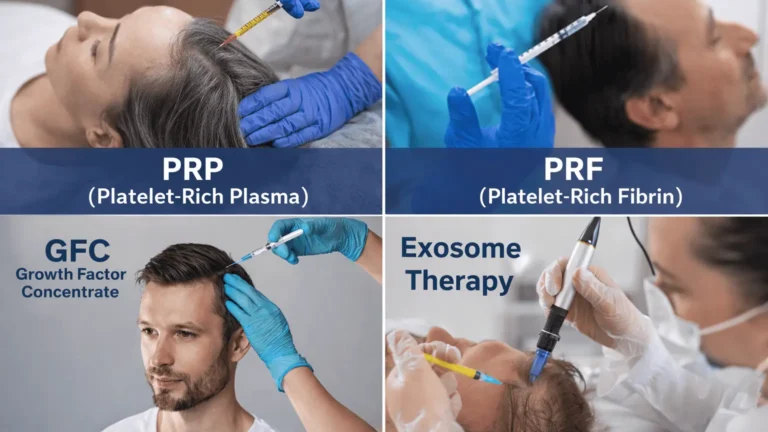
At FMS Skin & Hair Clinics, regenerative hair treatments such as Platelet-Rich Plasma (PRP), PRF (Growth Factor Concentrate (GFC), and Exosome Therapy are used to support hair restoration in suitable candidates. These treatments are especially beneficial for people in the early to moderate stages of hair thinning.
Understanding Hair Loss
Hair growth follows a natural cycle consisting of:
- Anagen phase – active growth stage
- Catagen phase – transition stage
- Telogen phase – resting and shedding stage
When this cycle is disrupted due to genetics, hormones, stress, nutritional deficiencies, illness, or scalp inflammation, hair follicles gradually shrink. Over time, this leads to thinner, weaker hair strands and eventually reduced hair density.
The most common type of hair loss is androgenetic alopecia, also known as male-pattern or female-pattern hair loss. It occurs due to a combination of genetic predisposition and hormonal factors, especially the effect of DHT on sensitive hair follicles. Hair follicles gradually become smaller, and the growth phase shortens, resulting in visible thinning.
Regenerative therapies work by delivering growth factors, proteins, and biological signals to dormant or weakened follicles, helping them return to a healthier growth cycle.
What Is Regenerative Hair Restoration?
Regenerative hair restoration refers to treatments that stimulate the body’s own healing and repair processes to improve hair growth.
These procedures are minimally invasive and are designed to:
- Reduce hair fall
- Improve scalp circulation
- Activate dormant follicles
- Increase hair density
- Improve hair shaft thickness
- Support healthier scalp conditions
Unlike hair transplantation, regenerative treatments do not involve surgery or downtime. They are ideal for patients who still have active follicles but are experiencing thinning, shedding, or poor hair quality.
The three most popular regenerative hair treatments today are:
- PRP Therapy
- PRF Therapy
- GFC Therapy
- Exosome Therapy
Each works differently, but all are designed to stimulate follicles and encourage hair regrowth.
PRP Hair Treatment: Using Your Body’s Own Healing Power
Platelet-Rich Plasma, commonly called PRP, is one of the most widely used regenerative treatments for hair loss.
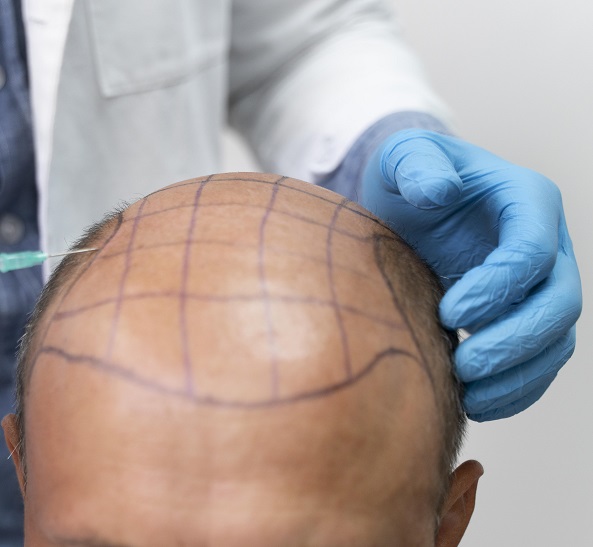
PRP is prepared using the patient’s own blood. A small blood sample is collected and processed in a centrifuge to separate platelet-rich plasma from other blood components. This plasma contains a high concentration of platelets, growth factors, and proteins.
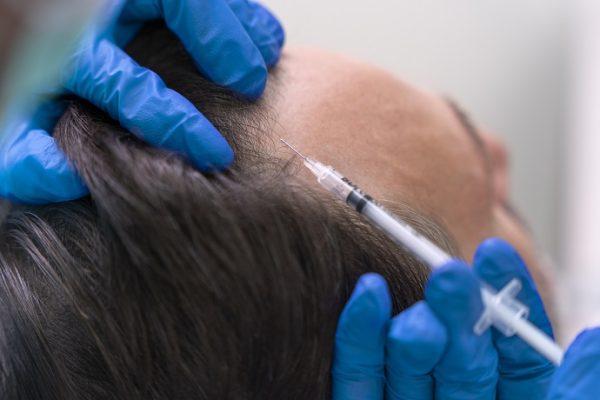
Once injected into the scalp, PRP releases several growth factors such as PDGF, VEGF, TGF-beta, EGF, and IGF-1. These growth factors stimulate blood supply, improve cell activity, reduce inflammation, and encourage hair follicles to remain longer in the active growth phase. IGF-1, in particular, is believed to help prolong the anagen phase of hair growth.
Patients receiving PRP may experience:
- Reduced hair shedding
- Better scalp circulation
- Increased hair density
- Improved hair thickness
- Stronger hair roots
Clinical studies have shown significant improvement in hair density following PRP Hair treatment. A meta-analysis found that hair density increased considerably after multiple PRP sessions, especially when treatments were performed consistently.
PRP is commonly recommended for:
- Male-pattern hair loss
- Female-pattern hair loss
- Early hair thinning
- Postpartum hair shedding
- Stress-related hair fall
- Hair loss after illness
- Supporting hair transplant outcomes
Most patients require 3 to 6 sessions spaced about 4 to 6 weeks apart, followed by maintenance sessions every few months for sustained improvement.
PRF Hair Treatment: Boosting Hair Growth with Platelet-Rich Fibrin
PRF stands for Platelet-Rich Fibrin. PRF is often considered the next generation of PRP because it contains a richer concentration of platelets, white blood cells, stem cells, and fibrin matrix.
Unlike PRP, PRF is processed more slowly and without anticoagulants, allowing it to retain more healing cells and release growth factors gradually over time. A blood sample is collected and processed in a centrifuge at a slower speed compared to PRP.
This creates a fibrin-rich layer that contains:
- Platelets
- White blood cells
- Stem cells
- Growth factors
- Fibrin matrix
The fibrin matrix acts like a scaffold that slowly releases growth factors into the scalp over time.
PRF may help:
- Improve follicle nourishment
- Stimulate new blood vessel formation
- Support stem cell activation
- Reduce inflammation
- Encourage stronger hair growth
Because PRF releases growth factors more gradually, some experts believe it may provide longer-lasting regenerative effects compared to PRP. PRF is particularly useful in treating androgenetic alopecia and helping awaken dormant follicles.
GFC Hair Treatment: A More Refined Form of Growth Factor Therapy
Growth Factor Concentrate, or GFC, is an advanced version of PRP treatment.
Like PRP, GFC is prepared using the patient’s own blood. However, instead of injecting platelets directly, GFC isolates and concentrates only the growth factors from the platelets. This creates a purer, more targeted formulation.
The growth factors in GFC are specifically designed to stimulate follicular activity, improve scalp nutrition, and support the regeneration of weak hair follicles.
Many patients prefer GFC because:
- It contains a higher concentration of growth factors
- It is more refined and purified than PRP
- It may cause less inflammation after treatment
- It is often associated with less discomfort
- Recovery is usually quicker
GFC Hair Treatment helps revive follicles that have become weak or inactive by improving the biological environment around them. It can enhance blood circulation, improve nutrient supply to follicles, and encourage thicker, healthier hair growth.
Because GFC is more concentrated, some patients may require fewer sessions compared to PRP. It is often recommended for people who want more advanced non-surgical hair restoration or who have not responded adequately to standard treatments.
At FMS Skin & Hair Clinics, GFC may be used alone or combined with other treatments depending on the severity and cause of hair loss.
Exosome Hair Treatment: The Future of Regenerative Hair Care
Exosome therapy is one of the latest innovations in regenerative medicine.
Exosomes are tiny extracellular vesicles released by cells. They act as messengers that help cells communicate with each other. These vesicles contain proteins, lipids, RNA, growth factors, and signaling molecules that can influence tissue repair and regeneration.
In hair restoration, exosomes are believed to stimulate dermal papilla cells, activate hair follicle stem cells, reduce inflammation, and improve blood supply around follicles. They may also help create a healthier scalp environment for sustained hair growth.
Research suggests that exosomes may support:
- Increased hair density
- Improved hair thickness
- Activation of dormant follicles
- Reduced scalp inflammation
- Better healing after hair restoration procedures
Unlike PRP or GFC, exosomes are not taken from the patient’s blood. They are derived from carefully processed cellular sources and contain concentrated regenerative signals.
Early studies on exosome therapy for hair restoration are promising. A systematic review found that exosome treatments showed positive results in hair density and thickness, with minimal adverse reactions reported. However, experts also note that more clinical studies are needed to establish standardized protocols and long-term safety.
Another recent review highlighted that exosomes may stimulate hair follicle stem cells and improve angiogenesis, making them an exciting option for future hair restoration therapies.
However, it is important to note that exosome therapy is still considered emerging and investigational in many countries. While results appear encouraging, treatment protocols may vary, and patients should only undergo exosome therapy under qualified dermatologists and hair restoration specialists.
PRP vs GFC vs Exosomes: Which Treatment Is Better?
Each regenerative hair treatment has its own benefits.
PRP is ideal for patients seeking a proven, natural, and cost-effective option using their own blood.
GFC offers a more concentrated and purified form of regenerative therapy and may provide better comfort and faster recovery.
Exosome therapy represents the next generation of hair restoration and may offer stronger regenerative signals, although more research is still needed.
The right choice depends on:
- Age
- Cause of hair loss
- Extent of thinning
- Scalp condition
- Previous treatments
- Lifestyle and expectations
- Budget and treatment goals
At FMS Skin & Hair Clinics, a detailed scalp analysis and consultation can help determine which regenerative treatment is most suitable for each individual.
| Feature | PRP | GFC | Exosomes |
|---|---|---|---|
| Source | Patient’s own blood | Patient’s own blood | Processed extracellular vesicles from biological sources |
| Main Component | Platelets and plasma | Concentrated growth factors extracted from platelets | Cell-signaling molecules, proteins, RNA, peptides, and growth factors |
| How It Works | Stimulates hair follicles using platelet-derived growth factors | Delivers purified growth factors directly to weakened follicles | Enhances follicle regeneration through cellular communication and stem cell activation |
| Concentration of Growth Factors | Moderate | High | Very high |
| Suitable For | Early hair thinning and mild to moderate hair loss | Moderate hair thinning and patients seeking advanced regenerative therapy | Advanced regenerative support and patients looking for newer treatments |
| Number of Sessions Required | Usually 3 to 6 sessions | Usually 3 to 4 sessions | Usually 1 to 3 sessions depending on protocol |
| Risk of Allergy | Very low, since it uses the patient’s own blood | Very low, since it uses the patient’s own blood | Low, but depends on the source and processing quality |
| Best Advantage | Natural, proven, and cost-effective | More refined and concentrated than PRP | Advanced regenerative potential and stem cell support |
| Limitations | May require more sessions | Slightly higher cost than PRP | Still considered an emerging treatment with limited long-term research |
| Cost | Lower | Moderate | Higher |
| Best Choice For | Patients seeking an affordable and established treatment | Patients seeking better concentration and quicker results | Patients looking for cutting-edge regenerative therapy |
Who Is a Good Candidate for Regenerative Hair Treatments?
You may be a suitable candidate if you:
- Have mild to moderate hair thinning
- Notice excessive hair fall
- Have a receding hairline
- Experience widening partitions
- Still have active hair follicles
- Want to avoid surgery
- Want to improve hair quality and density
These treatments are most effective when started early, before follicles become completely inactive.
Regenerative hair restoration has transformed the way hair loss is treated. PRP, GFC, and Exosome Therapy offer non-surgical, minimally invasive options for people looking to improve hair density, reduce hair fall, and restore healthier-looking hair.
While PRP remains one of the most established options, GFC provides a more advanced concentration of growth factors, and exosomes are emerging as a promising future-focused treatment.
At FMS Skin & Hair Clinics, personalized treatment plans are designed based on each patient’s hair condition, scalp health, and long-term goals. Early diagnosis and timely treatment can make a significant difference in preserving and restoring hair naturally.
If you are suffering hair thinning or hair loss issues. Consult FMS Skin & Hair Clinics for best hair loss treatments in Hyderabad
For Appointment Booking. Please call us or WhatsApp at 8885060760 Or Email Us at [email protected]
Frequently Asked Questions (FAQs)
Which is better: PRP or GFC?
GFC is generally considered more advanced because it contains a higher concentration of purified growth factors. However, PRP is still highly effective and remains a popular option for many patients.
Is PRP painful?
PRP involves scalp injections, so mild discomfort may occur. However, numbing creams are usually applied before the procedure to make it more comfortable.
How many sessions of GFC are required?
Most patients may need 3 to 4 sessions initially, followed by maintenance sessions depending on their hair condition.
Can exosomes regrow completely bald areas?
Exosome therapy may help stimulate weak or dormant follicles, but it may not be effective in areas where follicles are completely inactive or absent.
Are regenerative hair treatments permanent?
These treatments can improve hair growth and reduce hair fall, but maintenance sessions are often needed to sustain the results.
Can women undergo PRP or GFC treatment?
Yes. PRP and GFC are commonly used in women experiencing hair thinning, postpartum hair fall, and female-pattern hair loss.
Is there any downtime after treatment?
Most patients can return to normal activities on the same day. Mild redness or swelling may be present for a short time.
Can PRP and GFC be combined with hair transplant surgery?
Yes. PRP and GFC are often used before or after hair transplantation to improve healing and support better hair growth.
Are exosomes safe?
Current research suggests that exosome therapy appears to be safe, but more long-term studies are still needed. Patients should choose experienced clinics for treatment.
Who is the ideal candidate for regenerative hair restoration?
Patients with early to moderate hair thinning and active follicles are usually the best candidates for PRP, GFC, or exosome treatments.